
The period after childbirth can be beautiful, full of new wonders and new experiences. However, it can also be full of discomfort, especially if you had a C-section.
Your body goes through significant changes during pregnancy, surgery, and postpartum recovery. Healing does not always follow a straight line. It is common to feel “mostly better” while still noticing areas that feel different and uncomfortable.
Follow-up medical care plays a central role in C-section recovery, but that doesn’t mean you’re limited to it. There are several gentle ways to support day-to-day comfort and recovery. One of these methods is a cold laser therapy device for home use.
What Causes Post–C-Section Sensations?
Even long after the incision has healed, you may still notice areas of lingering tightness or sensitivity. These sensations can appear months or even years later, often surfacing during exercise, stretching, or everyday activities. Experiences with discomfort vary widely and can shift as your activity level changes.
To understand why this happens, it helps to know what is going on inside your body. After a C-section, the body has to heal multiple layers. This often builds up scar tissue. Sometimes, the surgery can damage nerve endings as well. A combination of these things is often what causes those uncomfortable sensations.
Sensitivity doesn’t mean something is wrong, though. It’s a natural and common part of the postpartum period. However, it can still be frustrating. This is what frequently sparks interest in at-home support tools like low-level laser therapy (or LLLT).
What is Cold Laser Therapy?
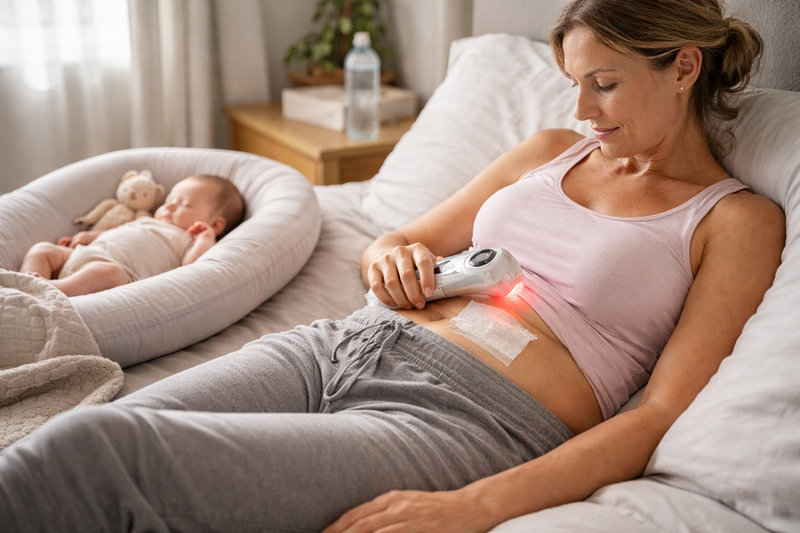
Cold laser therapy relies on light rather than heat or pressure. For each session, you hold the device against the skin of the targeted area for three to seven minutes. The device sends light deep into your tissues and stimulates your cells’ natural healing processes without causing pain or strong sensations.
Keep in mind that cold laser therapy is not a solution in itself. It can’t replace medical attention. Instead, it is a supportive option that you can add to a broader professional treatment routine.
Why a Softer Approach Can Make a Difference
Your body has already been through a major surgical event. The tissues in the abdominal area are healing, nerves are recalibrating, and your system may still be in a protective state. During this phase, high-intensity or aggressive approaches can feel overwhelming rather than supportive.
That’s where lower-impact options like cold laser therapy can fit in. Because it uses light energy and produces little to no sensation, it offers a subtle way to complement your recovery routine without adding physical stress. There’s no recovery from the recovery.
What often matters most in post-surgical care is consistency. A method that feels manageable and comfortable is one you’re more likely to continue. And over time, steady, gentle support can play an important role in how you feel as your body heals.
How At-Home Use Fits Into Everyday Life
The best cold laser therapy device for post-surgical care is one that you can integrate into your daily routine. If you own a personal LLLT machine, you can fit sessions into your day whenever it works best for you. You don’t have to schedule around appointments or worry about travel.
You may choose to use the device during rest periods or as part of an evening routine. You’re not limited to a specific time of a specific day. This flexibility matters when you are balancing family responsibilities or a job with your C-section recovery.
Using at-home LLLT also lets you adjust the frequency or timing of sessions according to your needs. You can keep recovery in sync with your body’s signals rather than following a rigid schedule with no wiggle room.
The Importance of Professional Guidance
Your healthcare provider understands your surgical history and recovery timeline. Their professional input can help you decide when to introduce at-home options and how to integrate them safely. You should consult with your doctor to align your chosen approach with your individual needs.
Remember that cold laser therapy is not a replacement for professional healthcare, but rather a complement. When used as directed and under your doctor’s guidance, LLLT can be a powerful tool, but don’t abandon medical care. Keep each element of care in its intended role.
Managing Expectations Around Long-Term Comfort
When exploring any supportive option, managing expectations matters. When you buy an LLLT device online, don’t expect it to instantly and miraculously heal you. That isn’t what it’s meant for. Cold laser therapy supports comfort and healing over time. It doesn’t create immediate change.
Consistency often creates more change than anything else. Even if you’re not sure that your device is making any difference to your C-section scar, keep your sessions consistent. Over time, you may notice subtle shifts, even if you never notice dramatic sensations.
Pay attention to patterns over weeks rather than single sessions. This long-term approach provides more useful insight into how cold laser therapy truly works for you.
Think About Recovery as a Process
Comfort after a C-section is more of a marathon than a sprint. Your body continues adapting long after visible healing occurs. Supporting that process often involves small, consistent habits rather than dramatic interventions.
At-home cold laser therapy fits into this process as a noninvasive option, supporting comfort alongside other practices. Don’t rely on it exclusively. Instead, integrate it into a balanced routine.
When starting cold laser therapy, stay patient and follow your healthcare team’s guidance. With consistency, you’ll find that your comfort evolves naturally over time as you move into motherhood.