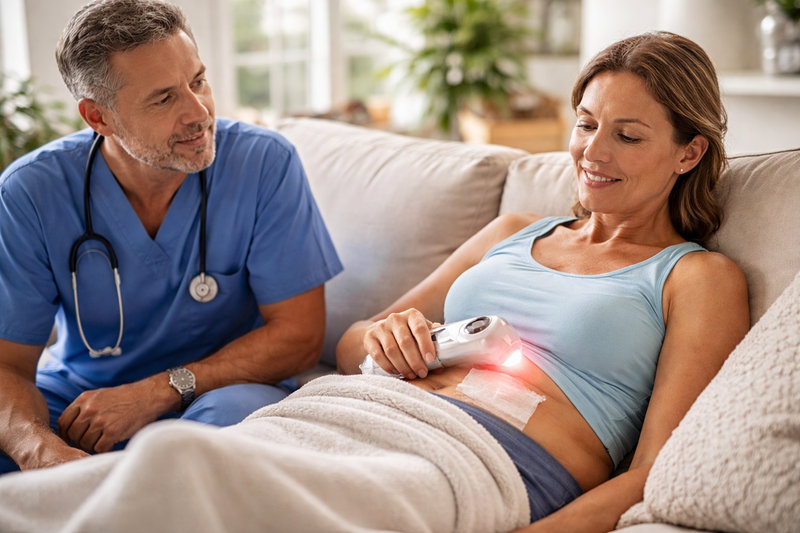
After you have surgery, your body moves through different stages of recovery. The earliest phase often comes with sensitivity and swelling around the surgical area. During this time, your body focuses on stabilizing and protecting the site. As you heal, your body gradually shifts from acute response toward steady repair.
During this phase of recovery, you may start using additional support methods, such as a personal, handheld soft laser therapy device. It can be a great way to help your body heal. But if you start using it too early on sensitive areas, it can feel very uncomfortable or overwhelming. Your body might not be ready for it just yet.
Recovery is a process, not a deadline. For a smoother experience, you need to align your recovery aids with what your body needs. Don’t push yourself by trying to rush it.
When you respect your body’s natural healing stages, you reduce unnecessary stress on your system. Here’s a guide to supporting your body’s healing after an operation with cold laser therapy.
Keep it Simple in the Immediate Post-Op Period
Right after an operation, you should aim for simplicity. Your body is already processing a major event, so adding extra inputs can feel distracting or uncomfortable. Pushing your body too hard could even delay or reverse the healing process.
During this window, you are most likely to notice small changes or sensations so you should prioritize rest and observation. Keep your routine simple to make it easier to understand what your body needs before adding anything new.
Allow the initial sensitivity to ease. Give your body time to settle and stabilize before introducing external support. Once your body moves beyond this initial phase, you can consider easing into gentle treatments to aid healing
Listen to What Your Body Tells You
Your body needs the proper amount of rest and support in post-operative recovery. It’s best to focus your recovery routine on gentle, supportive therapies.
Light-based approaches, including cold laser therapy, are designed to feel gentle and calming. Many people find they respond best when they introduce these therapies at a time that feels right for their body and recovery process. When your system is no longer in a heightened, protective state, it’s often easier to relax and fully settle into the experience.
There’s no need to rush the addition of supportive therapies. Thoughtful timing and clear guidance help ensure that cold laser therapy remains a comfortable, restorative part of your overall plan.
Pay attention to how sensitive the surgical area is as the weeks go on. Does the thought of holding a device close to or touching the skin make you cringe? If so, it’s probably a bit too early to begin cold laser therapy.
Base your timing on your comfort levels. This thoughtful timing helps the experience blend into your routine rather than stand out as a new stressor that causes pain. This shift allows you to evaluate how different elements fit into your routine and do what works best for you.
Follow Professional Guidance and Instructions
You should always listen to your doctor’s recommendations for recovery. Your care team understands the procedure you underwent and the general timeline your body needs to follow during recovery. Their input can guide you on when to introduce other methods, helping you avoid guesswork and unnecessary trial-and-error.
Check in with your doctor if you think you’ve reached the stage of recovery where you can try out cold laser therapy. They may recommend waiting another week, or they may give you the green light.
When using a cold laser device, you should also follow the device’s recommendations, especially for post-surgical recovery. Most devices instruct you to use the skin or muscle settings for surgical areas with collections of organs underneath, rather than the joint setting. These areas include the upper head, stomach and abdomen, chest, and throat.
Follow the instructions from both your care teams and your device to give yourself the safest and most effective recovery possible.
Common Timing Missteps to Avoid
Some people feel eager to try every available option as soon as possible. While enthusiasm is understandable, rushing the process can backfire. Introducing too many elements at once makes it harder to know what truly supports you and what doesn’t. It’s better to add one thing at a time.
Another common misstep is comparing timelines. There is no universal path to recovery. What feels right for someone else may not suit you. Stay focused on your own recovery stages and use what works for you. Don’t measure your progress against someone else.
Incorporate Cold Laser Therapy When You Are Ready
Approaching cold laser therapy after an operation works best when patience guides your decisions. When you introduce this noninvasive support at the right moment, it can fit comfortably into your recovery rather than compete with it.
Wait for the initial healing to settle. Then, when you’re ready, find the best cold laser therapy machine for post-surgical recovery. As long as you listen to your body’s signals and professional advice, you’re setting yourself up for a smooth recovery process.
Video
Infographic
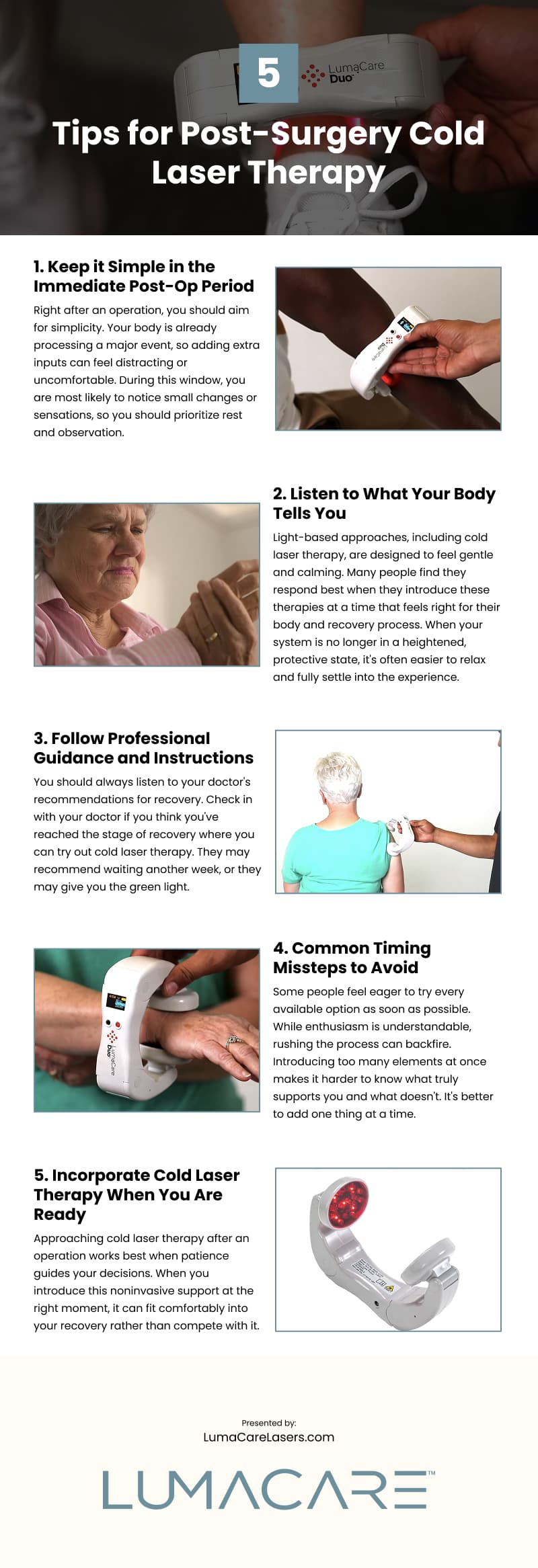
Post-surgery recovery is a gradual process that requires patience and close attention to your body’s needs. This infographic outlines how cold laser therapy can support and enhance your healing journey.