As an athlete, your schedule rarely stays the same. Training sessions and competitions take you all over the map. Everything varies, from location to travel time. And if you’re recovering from a sports injury, your packed schedule becomes even more strained. Important events often overlap with recovery windows.
Your rigorous schedule can make consistent recovery efforts difficult to maintain, especially if your tools are tied to a single location and rigid appointments. But you’re not out of options. Low-level laser therapy (LLLT), also known as cold laser therapy, can help you support your body without invading your schedule.
And the best part? With a portable LLLT device, you can bring that support wherever you go. You can use it whenever you need. Recovery doesn’t need to be an obstacle to your athletic career. Instead, the two can blend and help you forge a consistent, healthy pattern for your future.
LLLT Integrates With Busy Schedules
You know how hard it can be to fit extra steps into your training demands. As a result, an injury can feel like it completely upends your life. You may worry that you won’t be able to make time for extensive appointments.
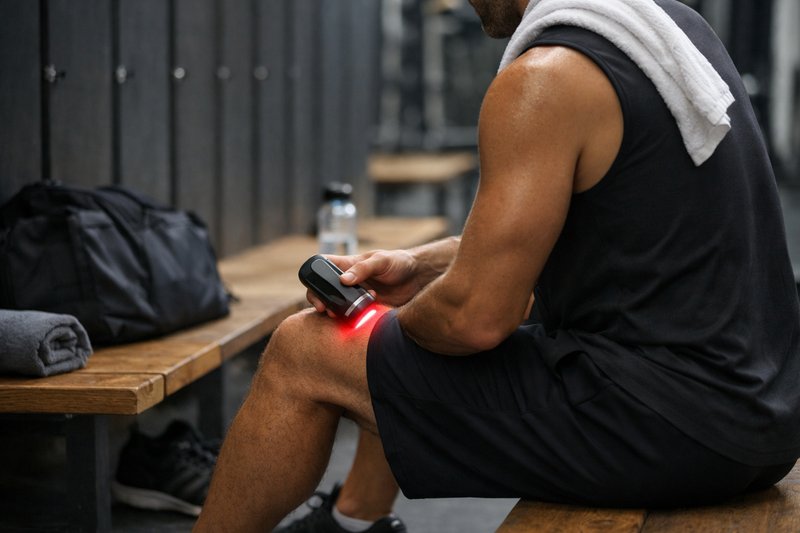
Carrying your own LLLT device for your sports injury makes recovery a part of your routine rather than an interruptive task. Cold laser therapy sessions are short, lasting from three to seven minutes. You can use it between workouts, during downtime, or while traveling without rearranging your day. This convenience helps you keep up steady recovery aid, even during packed weeks.
Ease of use also contributes to LLLT’s convenience. You don’t need any special training to use the device. You can use it entirely on your own and when it’s convenient. No scheduling required.
Recovery and athletics don’t need to compete for your time. With the right tools, you can stay engaged with recovery even when time and space feel limited.
Athletes Benefit From Non-Invasive Options
Athletics, in any form, can put stress on your body. Even without tearing a ligament or breaking a bone, sports are demanding. So when recovery methods place even more strain on your body, they can feel counterproductive and make the entire recovery process uncomfortable.
Cold laser therapy devices use the power of light to promote healing without heat or pressure, keeping your experience comfortable and non-invasive. You can use your device without worrying about added strain.
Because sessions are gentle, they integrate easily with rest and mobility work. With a portable, non-invasive cold laser therapy device, you won’t have to recover from the recovery tool itself. Your body already has enough to manage. Don’t give it more to struggle with.
Consistency Helps Support Healing
Consistency often separates effective recovery routines from inconsistent ones. Personal LLLT devices make it easier to maintain that consistency when your environment changes.
With many recovery approaches, effectiveness can vary based on setting or availability. Cold laser therapy, however, remains consistent regardless of circumstance. Whether you are at the gym, on the road, or preparing for competition, you can always access your portable recovery tool.
Keeping treatments consistent also helps you observe patterns in your recovery. You’re much more likely to notice real improvement as time goes on.
Your schedule may feel unpredictable, but your recovery doesn’t have to. Portable LLLT options support adaptability without sacrificing consistency.
Cold Laser Therapy Creates a Broader Recovery Plan
LLLT devices work best when they complement other recovery habits. You likely already focus on rest, hydration, nutrition, mobility, and other medically prescribed treatments. A portable light-based option won’t replace those habits. Instead, it supports them.
Check in on how your body feels. You’ll gain clearer insight into how your body and injury respond to each treatment method over time. That way, you can thoughtfully and proactively adjust your training and recovery plans based on what works and what doesn’t.
As always, follow your doctor or physical therapist’s recommendations. LLLT may not heal you all on its own, but it can provide support for your other strategies.
Carry Recovery With You
Long-term athletic progress depends on habits you can maintain. Owning a cold laser device supports habit-building by making recovery more accessible. The right tools support your goals without adding stress. Recovery can become part of your sustainable rhythm rather than a disrupter.
Don’t let a sports injury roadblock your athletic life, and don’t let your demanding schedule stop you from healing properly. With your own portable cold laser therapy device you can support your ambitions and your body.
Video
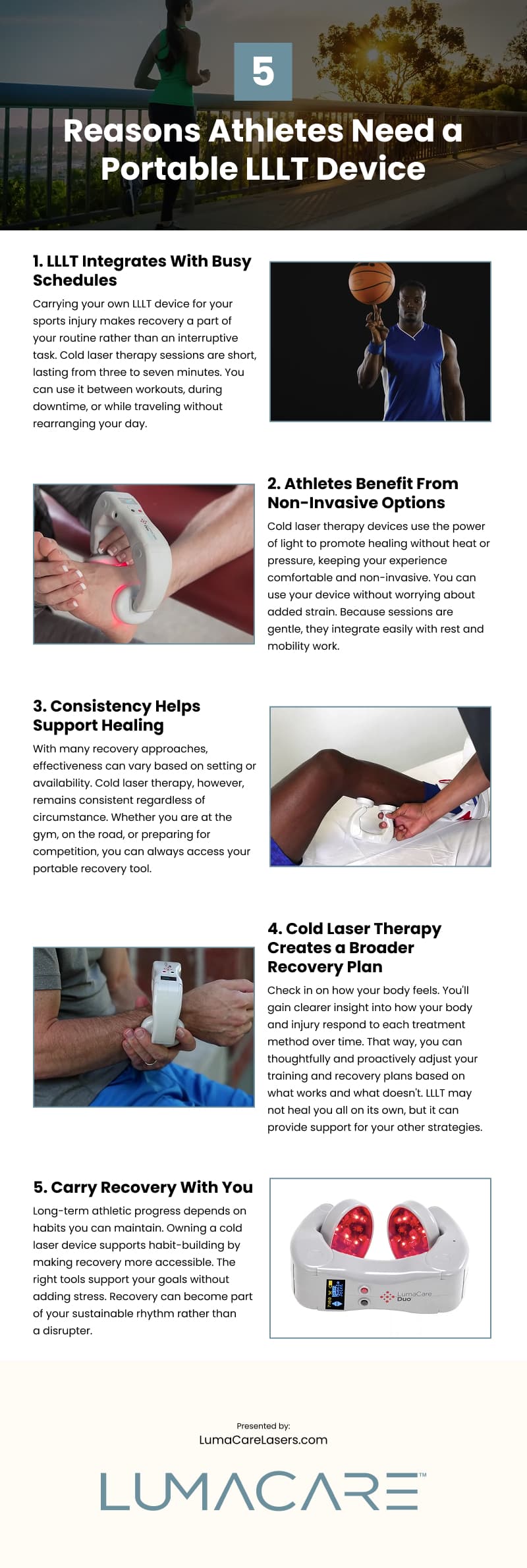
Infographic
Low-level laser therapy (LLLT), also known as cold laser therapy, is a powerful yet non-invasive recovery tool for athletes. Explore this infographic to discover why every athlete can benefit from having a portable LLLT device.