
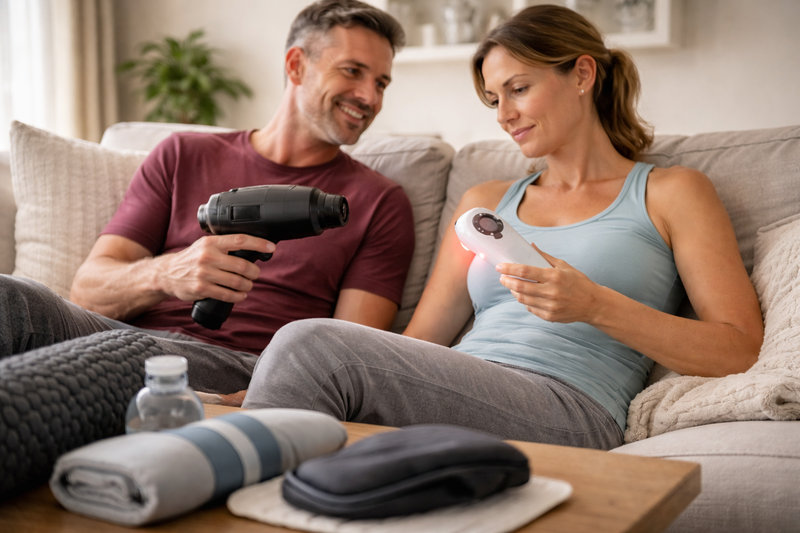
Dealing with soreness, stiffness, ongoing discomfort, or chronic pain is exhausting. Luckily, there are many personal devices available to help overcome these struggles. But each tool serves a different purpose. You can’t expect one to do everything.
Massage guns and cold laser therapy devices are two of these options. You may already use a massage gun for tight muscles or post-workout recovery. Cold laser therapy might seem like a more esoteric topic to you. But purchasing a cold laser therapy device for pain relief can be surprisingly beneficial.
The two methods aren’t competitors. Rather, they are complementary tools that address different needs. Once you understand the differences, you can decide when to use one or the other and when to combine the two. You’ll be able to build a balanced, effective routine that puts you on the path to comfort.
Massage Guns and Muscle-Focused Recovery
Massage guns use rapid, repetitive pressure to stimulate muscle tissue. The immediate feedback that comes from using one can help loosen tight muscles, increase circulation, and provide short-term relief. Many people enjoy the direct, hands-on feel of this type of recovery.
You may reach for a massage gun after a tough workout or a long day when your muscles feel stiff. The tool allows you to target specific muscle groups and adjust intensity based on your comfort level. This flexibility makes massage guns popular among athletes and active individuals.
Massage guns tend to work best when the issue is muscular. Tight calves, sore shoulders, or fatigued thighs often respond well to this type of pressure-based approach.
When Massage Guns Might Not Help
While massage guns often help, they aren’t ideal for every situation. Deep pressure can feel uncomfortable or even irritating in sensitive areas. Joints, tendons, and surgical sites often do not respond well to intense vibration or force. In these cases, pressure-based tools may feel like too much.
Massage guns also require active participation. You need to guide the device and tolerate the sensation. On days when your body feels tender or fatigued, this effort can feel draining rather than supportive.
If a massage gun feels like the wrong tool, it might be. Recovery works best when the approach matches the area and condition you are addressing.
Cold Laser Therapy Takes a Different Approach
Non-invasive cold laser therapy devices use light rather than pressure. The light creates little to no sensation during use. This makes cold laser therapy a good option for treating sensitive areas that a massage gun may hurt. The experience stays gentle, without any potentially uncomfortable vibration or compression.
Simply hold the device near the area you want to address for a few minutes until the session is over. It doesn’t require active effort. This passive nature sets it apart from massage guns.
You may find this approach appealing when you want support without stimulation. Cold laser therapy fits easily into rest periods and recovery routines that emphasize comfort.
Why These Tools Are Not Replacements for Each Other
Massage guns and cold laser therapy devices are not in competition with each other, nor are they interchangeable. They work through entirely different mechanisms. Massage guns ease muscle tension through physical stimulation. Cold laser therapy stimulates your cells’ natural healing processes through light-based interaction with your tissue.
They serve different purposes, too, so you can’t replace one with the other. If you try to use a massage gun on a sensitive joint, you may feel pain instead of relief. If you expect a cold laser therapy device to loosen a deeply knotted muscle immediately, you may end up disappointed.
Use each tool for its intended purpose. Match the tool to the problem rather than trying to force one solution to cover everything.
Using Both Methods Together
The differences between cold laser therapy and massage guns don’t mean that you have to pick one or the other.
Many athletes use both massage guns and cold laser therapy devices as part of a layered recovery routine. Massage guns often come into play after training sessions to address muscle tightness. Cold laser therapy may be used during rest periods to support comfort in joints or areas that feel sensitive.
Masseuses often use both in their services as well. Using the best cold laser therapy machine for massage clinics alongside a massage gun gives clients a wider range of recovery strategies. Many people can’t tolerate deep pressure, or their discomfort lies in the joints and tendons. By combining both tools, massage options can extend beyond muscle work alone.
For personal use, try alternating tools based on how your body feels. This often works better than sticking to only one method. On high-intensity days, muscle-focused recovery may take priority. On lighter days or during recovery phases, you might lean towards a gentler approach.
Choosing the Right Tool Based on the Problem
When deciding when to use which tool, focus on what your body is telling you. You may want to ask yourself:
- Is this discomfort in the muscles or the joints?
- Would pressure feel helpful or overwhelming right now?
- Do I need immediate relief, or would I rather support long-term comfort?
- How much effort and energy do I want to put into recovery?
Let your recovery adapt to your needs. If you want more intense and quicker relief, grab a massage gun. But if you’d rather have a more passive, non-invasive experience, go with cold laser therapy.
A Balanced Routine Matters Most
Recovery routines succeed when they are sustainable. You do not need to choose one philosophy over the other. Instead, create a routine that’s open to shifting based on your personal comfort. That way, you can build and maintain a balance that supports your long-term wellness rather than short-term fixes.
Remember what each tool can do and keep your expectations realistic. Cold laser therapy can’t fix every issue, and neither can massage guns. Build your routine to complement those differences. When you do, you follow a consistent path to recovery that works with your body.