
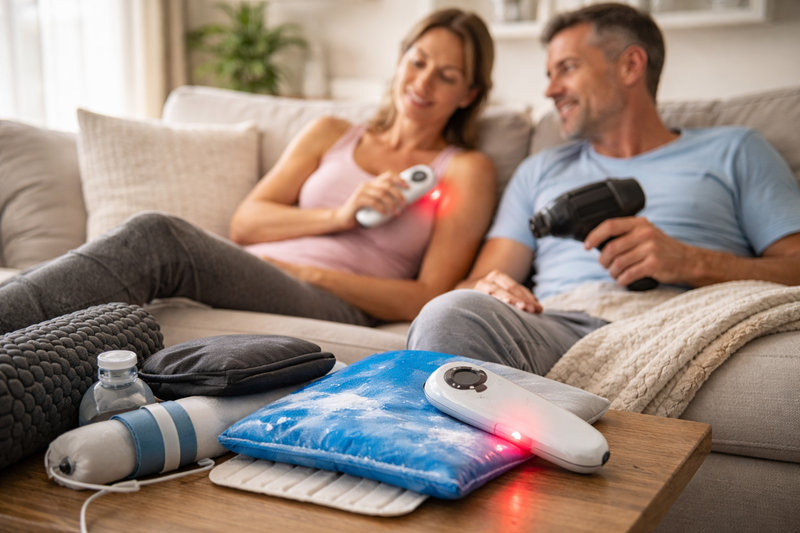
Recovery rarely relies on just one tool. Typically, you try out a combination of foam rollers, heating pads, ice packs, and compression sleeves. You may find that some tools feel too intense. Others might feel inconvenient or disruptive to your day.
Recovery works best when it fits naturally into your daily life. If none of the options are quite giving you the support or experience you need, it may be time to try cold laser therapy.
Let’s compare some common recovery tools side-by-side with this light-based option. Whether you are looking for the best cold laser therapy device for a sports injury or for surgical recovery, we’ll walk you through how it can fit into your broader wellness routine.
What Makes Cold Laser Therapy Different
Cold laser therapy uses light without any pressure or temperature change. Your device projects a low-level laser deep into your tissue, stimulating your cells’ natural healing processes. Essentially, it helps you noninvasively heal from the inside.
While most other tools produce sensations while they work. You may experience some pain or pressure during treatment. Low-level laser therapy (LLLT) works entirely at the cellular level. You don’t need to prepare yourself for discomfort or soreness afterward. This ease makes it easier to stay consistent, especially during busy weeks.
Cold laser therapy works best as part of a broader routine rather than a standalone solution. If you own a cold laser therapy machine for home use, you can easily combine it with other wellness methods to maximize recovery support and comfort.
How It Compares to Heat-Based Tools
Heat-based tools, such as heating pads and warm packs, typically work best for relaxation. You might apply warmth to the recovering area while resting to soothe pain or discomfort. Heat provides immediate and noticeable sensory feedback, which many find comforting.
LLLT differs in that it does not rely on temperature. You don’t feel warmth during use, which allows you to use it on sensitive areas where warmth might increase discomfort.
Cold laser therapy may not feel dramatically different in the moment. Rather than focusing on instant relief, it is designed to work gradually, complementing the body’s natural recovery process over time.
How It Compares to Cold-Based Tools
Ice packs and cold compresses are usually most effective after intense activity or strain. It works almost immediately to reduce swelling and inflammation. This strong sensation can be helpful, but it can also be uncomfortable for some people. The cold may just be too intense.
Despite the name, cold laser therapy does not create a cooling sensation. Rather, that “cold” refers to the absence of heat. You’re not bracing against the feeling of ice against your skin. You are simply letting light do its work.
For people who avoid the harsh feeling of ice, LLLT offers a gentler alternative.
How It Compares to Compression and Massage Tools
Compression sleeves, massage guns, rollers, and other manual tools rely on physical pressure to improve blood circulation and reduce muscle soreness. These tools often cause pain, especially in sensitive or overworked areas. You may enjoy the deep pressure at times, but there are moments when it feels like too much.
Cold laser therapy takes a passive approach. You don’t need to apply force. You don’t even need to touch the skin. You can rest while the session runs rather than actively tensing against the pain.
If you prefer broad exposure, you can purchase a dual-head wraparound LLLT device. That way, you can target two sides of the same area, the same way a compression sleeve would.
Convenience and Consistency Across Tools
Convenience plays a major role in which recovery tools you use consistently and which ones end up shoved in the back of your closet. Tools that require significant time to set up, use, or put away often fall out of routine. You may feel that they just aren’t worth the effort.
Cold laser therapy requires minimal preparation, making it easier to use regularly. Just sit down and hold it against your skin for a few minutes at a time. It can fit in between daily activities, which makes it easier to maintain consistency.
In most cases, recovery benefits come from routine rather than one-time use. And when a tool fits your lifestyle, it becomes part of your rhythm instead of an extra task.
Choosing the Tools That Are Right For You
No single recovery tool fits everyone. Your preferences and schedule shape what works best for you. Here are some questions you can ask yourself when deciding between tools:
- Do you prefer passive or active recovery tools?
- How much time do you realistically have for recovery each day?
- Do you want to avoid intense sensations like heat, cold, or pressure?
- Do you value immediate relief or long-term support more?
You may also rotate tools based on how you feel. On some days, you might need the instant relief of a heat pack. On other days, the gentler cold laser therapy approach may sound like the most helpful option.
You don’t need to rigidly follow one method. You can use as many or as few tools as you want to build a recovery routine that feels right for you and fits in well with your habits.
Fit Cold Laser Therapy Into Your Routine
Cold laser therapy often fits in best as one piece of a balanced recovery routine. Each tool serves a different purpose, so they can all complement each other. They do not have to replace each other. LLLT is no different.
Choose the tools that match your lifestyle and recovery goals. If your primary values are convenience, noninvasive use, and long-term support, cold laser therapy may fit perfectly into your routine. And with your own, at-home device, you can find pain relief and recovery aid right at your fingertips.