
Tendons are quite flexible, helping our muscles and bones work together to perform everyday movements and exercises. Occasionally, tendons can become inflamed from overuse, overstress, or traumatic injury. Tendonitis, or inflammation of a tendon, is painful.
If you’ve experienced pain in a tendon, you may be wondering, “How long does it take for tendonitis to heal?” Moderate tendon injuries may take about 6-8 weeks to heal while more serious injuries could take up to 6 months or longer, depending on the cause of the inflammation and severity of your injury.
Low-level laser therapy (LLLT), also called cold laser therapy, can aid in the healing process. Whether treating chronic pain or as part of your acute pain therapy plan, LumaCare makes treatment easily affordable and accessible. Read further to learn more about cold laser therapy and tendonitis.
What Are Signs of Tendonitis?
Tendonitis will present as pain in specific tendons, tenderness near joints and difficulty moving certain joints, and mild swelling. You may sense a “grating” or “rubbing” in the area where the tendons are injured or inflamed.
Does Tendonitis Ever Go Away?
Many cases of tendonitis do, indeed, go away. With proper rest and treatment specific to your injury, you should be back to normal activities in a few weeks. However, the cause and extent of your tendonitis will impact your recovery time.
Following are types of tendonitis, possible length of impairment, as well as suggested treatment options for each type.
| Location of Tendonitis | Estimated Duration | Treatment Options |
| Shoulder | At least 6 weeks | Cold Laser Therapy, Steroid Injection, Physical Therapy, Surgery, Platelet-rich plasma (PRP) therapy, Arthroscopy |
| Foot | A few weeks to a few months (depends on the cause and extent of the injury) | R.I.C.E. (rest, ice, compression, elevation), Immobilizer, Orthotics, Cold Laser Therapy, NSAIDS, Physical therapy |
| Wrist | A few weeks to over 6 months (depends on the cause and extent of the injury) | Immobilizer/Splint, NSAIDS, Cold Laser Therapy |
| Elbow | 6 months to 1 year | Counterforce Brace, Cold Laser Therapy, NSAID cream, Physical Therapy, Ultrasound Therapy |
Cold Laser Therapy to Speed Healing
Studies have found that an exercise/therapy program combined with laser treatments can improve the recovery of injuries.
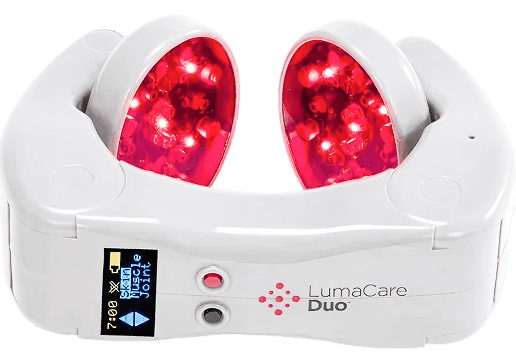
Our therapeutic lasers can increase blood flow to the cells of stressed tendons to improve muscle recovery. LumaCare Duo is among the best LLLT devices available for clinical use as well as for use at home.
Learn what happens if tendonitis goes untreated, and always consult your family physician to determine the best treatment program for your tendonitis.