
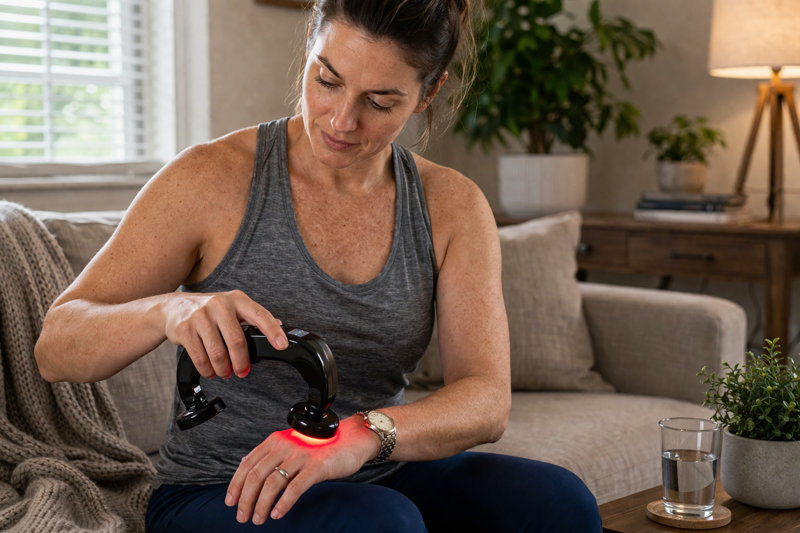
An at-home low-level laser therapy (LLLT), also known as cold laser therapy, can give you direct access to a useful recovery tool. But the results you get can depend largely on how consistently and correctly, you use the device.
Laser therapy is generally most effective when used with proper technique and stay consistent; just like taking medication at the proper dose and time. If you want to get the most from your sessions, how you apply the laser matters as much as the device itself.
Here are seven of the most common mistakes people make when using cold laser therapy, and how you can correct these mistakes and improve your overall experience with your LLLT device for home use.
1. Skipping Sessions or Using It Inconsistently
Low-level laser therapy is designed to work by stimulating the body’s natural processes over time. Many people think they should see results immediately, like flipping a switch. In reality, it’s more like watering a plant. You need to water a plant regularly and frequently to help it grow. LLLT is the same way.
Regular, short sessions are commonly recommended. They help maintain a steady routine. When you skip days or only use your device when pain flares up, your results become harder to track and easier to miss.
If you’re targeting inflammation in your wrist or knee, and you apply the laser two or three times in one week. Then, over the next week, you don’t use it at all. It is more difficult to track how your body responds over time. Every time you break the routine, you press pause on your potential progress.
Don’t wait for the pain to return. Create a schedule you can stick with, even if it’s just five minutes a day. Consistency builds momentum and gives your body a steady rhythm of support.
2. Using It Too Long
It’s tempting to think that if five minutes is good, fifteen must be better. But with cold laser therapy, longer sessions aren’t necessarily more effective. In fact, using the device longer than recommended can actually work against you, delaying recovery or creating irritation.
Most of the best cold laser therapy devices for recovery support recommend a short time for each session. Sessions typically last from three to seven minutes per site. Going beyond that may not increase the effects of your session.
If you notice diminishing returns or skin sensitivity after longer sessions, it’s time to dial back. Stick with the recommended treatment time. Let consistency do the work.
3. Targeting the Wrong Area
Placement matters. You might feel pain in one area, but the actual source of the issue could be somewhere else nearby. For example, elbow pain might originate from tension in your forearm muscles or inflammation in the surrounding tendon. Most of the time, it doesn’t actually come from the elbow joint itself.
If you aim your device at the wrong location, you’re not allowing the device to address the problem area. You might be skipping the true problem area entirely.
Before using your device, take a moment to assess where the discomfort begins and radiates from. Use your fingers to trace tenderness or tension. Then apply the laser in those zones. Hold the device steady rather than waving it around.
4. Jumping Around Too Much
It can be tempting to try to treat every area of discomfort at once. But focusing on too many spots in a single session can make it difficult to follow a consistent routine.
Most devices recommend spending a few minutes on each area. If you switch between areas too quickly, it may be harder to stick to those recommended times.
Try focusing on one or two spots per session. After a few sessions on those areas, you can move on to other spots as part of your regular routine. This approach makes it easier to stay consistent and get the most out of each session.
5. Letting Something Block the Laser From Your Skin
This sounds like an obvious mistake, but it’s less straightforward than you might think. Clothing and bandages might seem thin enough, but they can block or diffuse the laser light.
You may also be holding the device too far away from your skin. Once again, this can allow the light to diffuse before it reaches you. Most devices are meant to be used while touching or very close to the skin. Follow your device’s instructions on the recommended distance.
6. Not Following Instruction Guides and Protocols
If your device came with a usage guide or online training, it’s worth revisiting. These resources exist for a reason. Cold laser therapy isn’t complicated, but it does require you to understand the recommended timing, frequency, and site-specific application.
Sometimes, different settings exist on LLLT devices for arthritis, acute pain, inflammation, or other specific conditions. Choosing the correct settings makes sure you are using the device as intended.
If you haven’t noticed changes in comfort or routine effectiveness, revisit the protocols and make sure your use aligns them with your goals.
7. Being Impatient With the Process
It’s easy to fall into the mindset that quick fixes mean success. Many people assume they’ll feel immediate results after one or two sessions. When that doesn’t happen, they either stop using the device or double their usage in frustration. Both reactions can backfire.
Cold laser therapy is designed to be subtle and cumulative. That’s actually one of its strengths. It supports your body naturally and non-invasively rather than forcing a response or masking pain.
To get the most out of your sessions, you’ll need patience. That might mean using your device daily for several weeks before you get any clear feedback. Proper use over time is what really makes the difference.
Make the Most of What You Have
Cold laser therapy is a powerful tool, but only when you use it properly and intentionally. There are a lot of simple mistakes that can delay or hinder your results. The good news? Each of these mistakes is an easy fix.
Your body has the capacity to heal. Using LLLT as a habit instead of a one-off solution is the best way to support that potential one session at a time.