You’re tired of battling pain. Whatever the cause is, you may have found that most solutions seem unmanageable and invasive. They often require time, effort, or additional recovery that you would rather avoid.
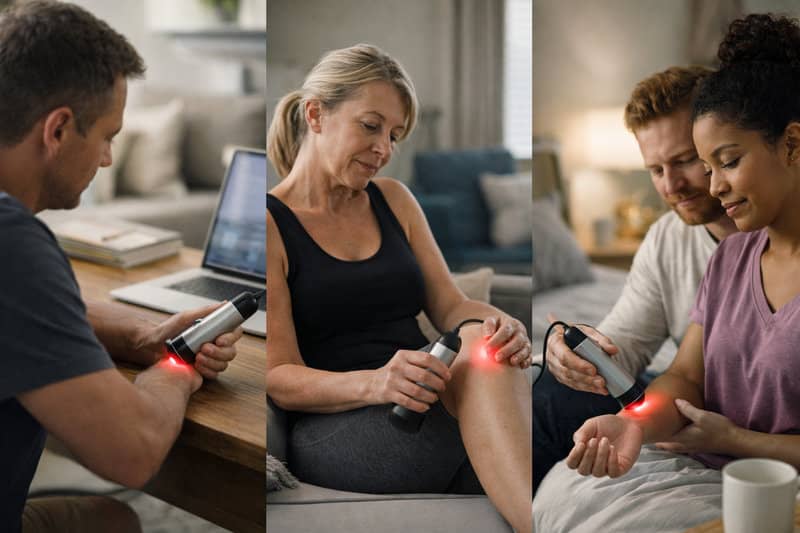
Looking for a treatment that aligns with your values and life can become exhausting in a hurry. But you’re not out of options. Cold laser therapy is a light-based method that can easily fit into everyday routines without disrupting your schedule. It relies on light to aid healing rather than physical manipulation or chemical input, making it a much gentler approach.
Low-level laser therapy devices are for sale as an emerging wellness tool. They’re available for all who are interested, not just professionals in clinics. You don’t need invasive treatments and recovery time to take care of your body.
But how do you know if cold laser therapy can help you? Let’s break down some of the conditions that cold laser therapy helps so you can decide if it’s right for you.
Stiff Joints and Limited Mobility
Cold laser therapy is often used to address stiff or achy joints by delivering focused light directly to the affected area. This targeted light penetrates the skin and stimulates cellular activity involved in circulation and tissue repair. By supporting these natural processes at the source of discomfort, cold laser therapy may help reduce stiffness and improve joint mobility over time. With consistent sessions, you may find it easier to move comfortably and stay active.
If you buy a cold laser therapy device, you can integrate sessions into your routine with no downtime or special preparation. You remain in control of the experience the entire time. Because the process is so simple, you can continue other wellness practices alongside it. When added to stretching or gentle exercise, cold laser therapy can become a proactive tool for supporting joint, muscle, and skin health.
This approach does not replace medical care for severe conditions, but it can add an extra layer of support for managing everyday discomfort. The goal is to help you move with less restriction and maintain functionality over time, adding to your comfort day by day.
Muscle or Tendon Strains
Muscles and tendons that become overworked or injured may take weeks or even months to heal. The pain that comes with that is no joke. Cold laser therapy can help support the recovery process. As the light penetrates targeted areas, it assists normal cellular activity. This boost can reduce the stiffness or tightness you feel in your strained muscle or tendon.
Each cold laser therapy session remains focused and brief (mere minutes), concentrating specifically on the area that needs attention. Unlike many other treatments, you don’t have to limit activity afterwards. Your regular routine can move forward while still providing targeted support.
When paired with light movement or rehabilitation exercises, cold laser therapy may help improve the flexibility of the affected muscles and enhance your comfort. It offers a gentle, non-invasive way to encourage tissue health during recovery.
Chronic Conditions
Conditions such as osteoarthritis, tendinopathy, neuropathy, or rheumatoid arthritis can create ongoing discomfort. These usually don’t heal with time, which can be frustrating and exhausting to live with.
Cold laser therapy offers a non-invasive approach to relieve these areas. You may find that repeated sessions contribute to steadier mobility or reduced pain over time.
While not a cure, cold laser therapy can complement your broader management plan. Be sure to combine treatment with the exercise, stretching, or medications prescribed by your healthcare provider. When done with care, using a cold laser therapy device for neuropathy or another chronic condition provides a consistent, gentle tool to support long-term functionality.
Overuse or Repetitive Motion Strains
Repetitive activities, whether at work or in hobbies, can cause tension or soreness in specific areas of the body. Working with your hands can cause carpal tunnel syndrome, while athletics can lead to tendonitis, and the list goes on. Unfortunately, these painful conditions are common and can severely impact your quality of life.
Cold laser therapy enables you to target these areas, supporting tissue health and alleviating strain. Because sessions are precise and don’t require any downtime, the treatment works subtly into your life. Your body’s energy increases at a cellular level without triggering even more discomfort, unlike tactics involving pressure or heating.
Use your cold laser therapy device alongside stretching, gentle activity, frequent breaks, or ergonomic adjustments. This combined approach can help you manage recurring strain more effectively. And because of the tool’s targeted nature, it can become a convenient way to support those tricky areas with frequent tension.
Physical Rehabilitation and Recovery
If you are already working on physical rehabilitation following an injury or surgery, cold laser therapy can be a helpful complement. The light can give a well-needed energy boost to the healing cells without adding stress or pressure to the sensitive area.
Purchasing your own device allows you to fit sessions in whenever is most convenient for you, like between rest or physical therapy sessions. Cold laser therapy won’t interfere with your recovery plan, but you should let your care team know you are using a device at home.
Using cold laser therapy in this context can help you feel more confident in your progress. You’ll know that you’re making your best effort to recover in the long term and in a way that stays non-invasive to your body.
How to Decide If Cold Laser Therapy is Right For You
Because cold laser therapy can benefit a wide variety of people, determining whether it aligns with your goals comes down to your personal preferences. Maybe you’re wary of needles or the extra stressors that other treatments often bring to your body. Maybe you’re struggling to balance work, family, hobbies, and friends, and just can’t see a way for any time-consuming treatment to fit in.
With your own cold laser therapy device, you find a personal, non-invasive assistant in your path to comfort. You keep your schedule flexible, your treatments gentle, and your mind light as you follow a simple and effective routine to heal. You don’t need to rely only on doctor visits and exercise routines. You can find pain relief right at your fingertips.
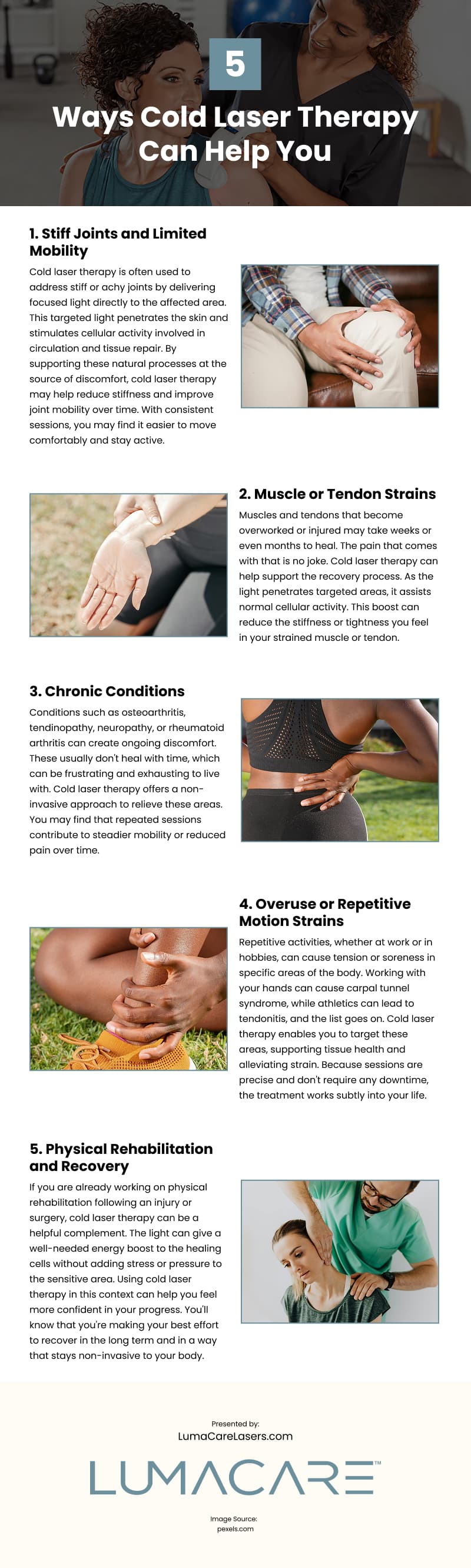
Infographic
Finding a treatment that aligns with your values, schedule, and lifestyle can feel overwhelming—especially when pain or limited mobility disrupts daily life. This infographic highlights how cold laser therapy may support your recovery and help you regain comfort and mobility.