
When supporting recovery after surgery or an injury, it is easy to assume that stronger always means better. Many recovery tools lean into that idea. They create heat, pressure, or other noticeable sensations that make the session feel active. That approach can work in some situations, but it does not fit every body or every stage of recovery.
Non-thermal laser therapy (or cold laser therapy) takes a more gradual, low-intensity approach. Instead of relying on heat or strong physical sensations, it is designed to support recovery in a way that fits into a consistent routine. Sessions are typically comfortable and easy to repeat, without the need to prepare for intensity or factor in recovery time afterward.
If you want something that fits into daily life while still supporting your body, comfort and consistency matter. While the effects may be subtle during each session, the best non-thermal laser therapy device for recovery support is designed for regular use as part of a routine that helps support the body’s natural recovery process over time.
What Non-Thermal Laser Therapy Does Best
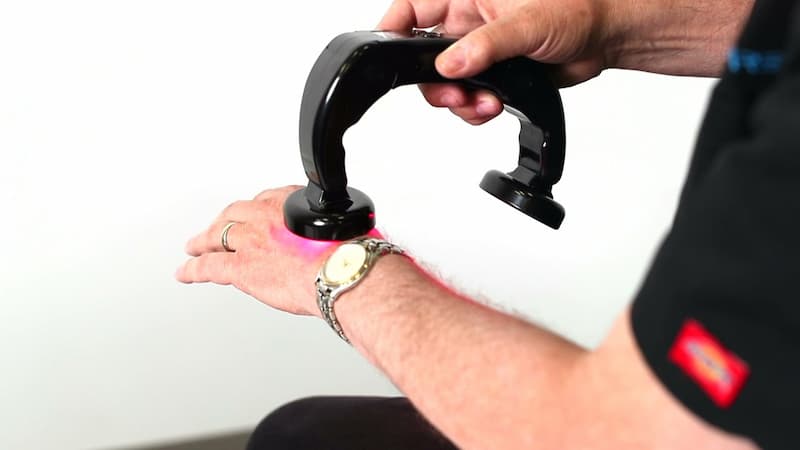
Non-thermal cold laser therapy devices’ primary mode of action is to deliver red and near-infrared wavelengths of light. They do not rely on aggressive stimulation or heat, which is why it is also called “cold.” During sessions, which typically last from three to seven minutes, this low-level laser delivers light to the skin and underlying tissues. This process is thought to support cellular activity, including processes involved in tissue repair.1
In most cases, you feel very little during the session itself. That can be surprising at first, especially for those used to more noticeable methods, but the gentle nature is intentional. The aim is to provide a low-intensity option that can support recovery in a way that works with the body, rather than adding additional stress to sensitive areas.
Why Intensity Can Backfire in Sensitive Situations
There are times when intensity seems productive simply because it feels obvious. You use a strong tool, you feel a strong response, and it seems like the pain and stimulation must have made something happen. That can be encouraging, but it can also complicate recovery when the area in question already feels irritated or sensitive.
A cold laser therapy device for pain keeps the experience low-drama. It doesn’t add heat to an area that already feels inflamed. It doesn’t press hard into tissue that needs a lighter touch. Instead, cold laser therapy is no-contact. It uses light to support a consistent care routine because every session is not an event you need to recover from.
Many choose to explore cold laser therapy for addressing recurring soreness, post-activity recovery, or areas that don’t tolerate force well. It is a therapy you can add that is often used alongside existing care approaches.
A Gentle Approach That Fits Into Real Life
Recovery does not happen in a vacuum. You recover amidst daily life activities, while working, commuting, parenting, traveling, and trying to keep up. And recovery habits you can actually maintain have the opportunity to provide support more often than methods you avoid out of discomfort and only use occasionally.
A consistency-first approach matters. A tool that requires a special setup, leaves you feeling overstimulated, or turns recovery into a chore often falls out of rotation. A gentler method is more likely to become part of your normal rhythm.
Cold laser therapy sessions are quick and well-tolerated. As a result, many find they can use cold laser therapy after an activity, during a quiet part of the evening, between physical therapy appointments, or in another existing gap in their schedule. It doesn’t have to disrupt the normal pattern of your day.
Cold Laser Therapy in a Recovery Routine
Cold laser therapy works best when you see it as one part of a larger routine. It doesn’t replace other recovery tools. It is a steady support that complements what you are already doing. You can typically use it as part of a broader plan that includes other supportive habits. You might pair it with:
- Rest days when your body needs lower-input recovery support. This can help you stay engaged with your routine without adding more strain.
- Light movement or mobility work when you are trying to stay consistent without pushing too hard. In that setting, it supports the overall rhythm of recovery.
- Ongoing wellness methods that already focus on comfort, repeatability, and gradual progress.
This kind of routine feels more sustainable because each piece has a clear role. You are building a recovery environment that supports regular care, not expecting one tool to do everything.
What to Expect with Regular Use
The most important thing to remember with cold laser therapy is that the value comes from regular use over time, not from a single dramatic session. Intensity is not always proof that something is working. Relaxing, quiet routines can still be effective.
Make sure your expectations match the design. When you start cold laser therapy, don’t expect obvious sensations. Instead, expect to feel little while knowing it is one more way you are supporting your body’s healing processes.
Over time, consistency becomes the focus. Cold laser therapy devices do not rely on force or intensity. They offer a low-level, repeatable approach that you can incorporate alongside other recovery strategies, helping you maintain a steady, manageable routine without adding additional strain to sensitive areas.
Building a Recovery Plan You Can Maintain
If you want a recovery routine that lasts, start by asking a simple question: Can I realistically keep doing this? The answer to that question can help you separate the useful tools from short-lived experiments.
Non-thermal laser therapy fits into the practical side of things. It offers non-invasive support that you can use regularly without disrupting comfort or daily life. That makes it easier to keep showing up for your own recovery, even on days when energy is low or your schedule is full.
Over time, consistency beats intensity because it keeps you in motion. It keeps recovery present in your life instead of turning it into something you restart over and over. That is where cold laser therapy earns its place as quiet, repeatable work that fits into a long-term wellness routine.
Video
Infographic
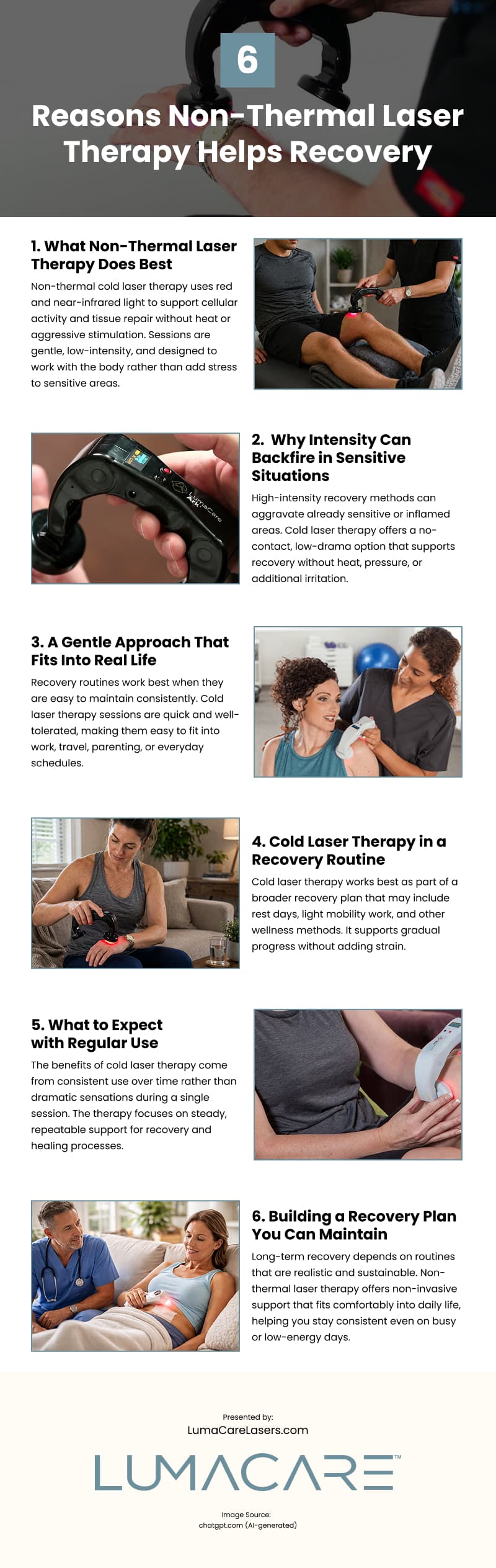
Recovery after surgery or injury doesn’t always require aggressive treatments. Gentle, consistent approaches often support healing without added stress. This infographic explains how non‑thermal laser therapy promotes recovery in a safe, low‑intensity way.
Sources:
1https://pmc.ncbi.nlm.nih.gov/articles/PMC4743666/