Pain, whether chronic or situational, rarely fits into a single category. Some days it may feel like muscle soreness after physical activity. Other times, it may present as joint stiffness, nerve sensitivity, or recurring discomfort. Because pain can vary so widely, it requires different approaches depending on the individual and the underlying cause.
A handheld cold laser therapy pain device is one modality that may be used in clinical or therapeutic settings as part of a broader pain management plan. It is a non-invasive approach that does not involve heat or direct pressure and is typically used alongside other treatments rather than as a standalone solution.
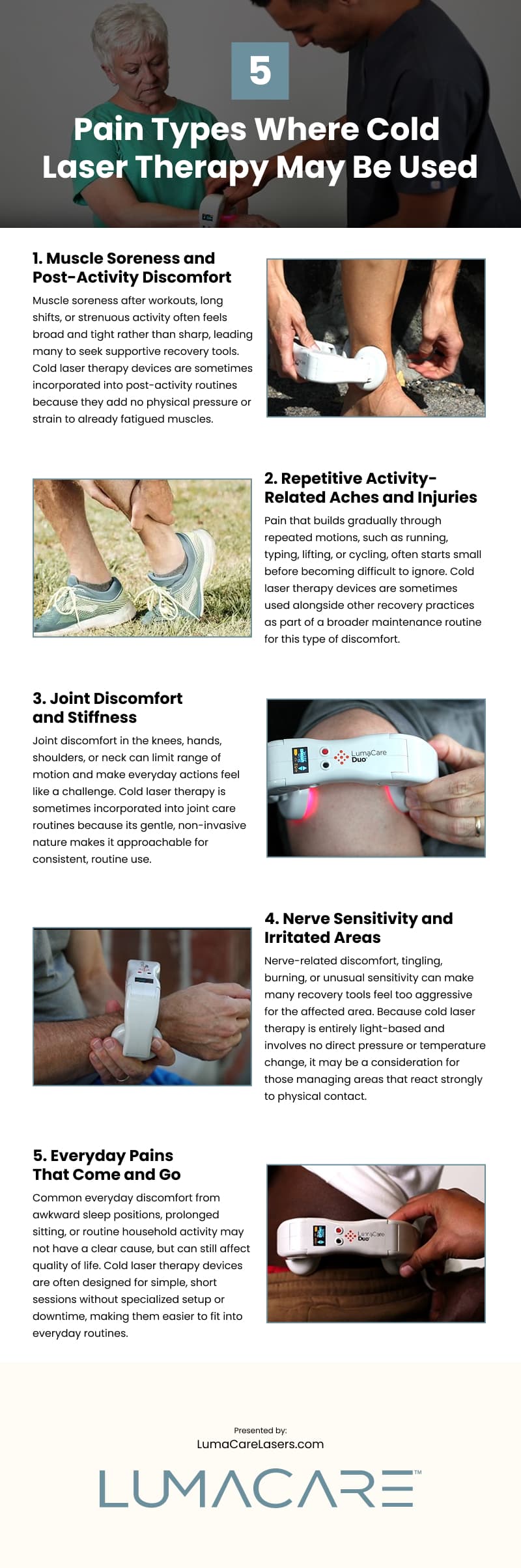
When pain patterns are inconsistent or difficult to predict, clinicians may consider multiple supportive options as part of a comprehensive care plan. Below are five common types of pain where cold laser therapy is sometimes included as part of treatment discussions.
1. Muscle Soreness and Post-Activity Discomfort
Muscle soreness is one of the most familiar reasons people turn to supportive recovery tools. You may feel it after a hard workout, a long shift on your feet, yard work, or a day of strenuous movement that asks more from your body than usual. This kind of discomfort often feels broad or tight rather than sharp.
Many people chose a cold laser therapy machine for home use in this type of post-activity context as part of their broader recovery plan. These low-intensity devices do not add physical strain or pressure, which some individuals may prefer after exercise or physically demanding activity.
Because of this, some users incorporate sessions into existing routines such as rest days or periods after physical activity. How often they are used and how they fit into a routine varies based on individual preference and guidance from a healthcare provider when applicable.
2. Repetitive Activity-Related Aches and Injuries
Some pain does not come from a single obvious injury or strain. It builds gradually through repetition. You may feel it after running, lifting, cycling, typing, driving, or any activity that asks the same thing from the body again and again. These aches often start small, then slowly get worse until they become hard to ignore.
Cold laser therapy devices are sometimes part of broader routines that focus on general physical maintenance and comfort. In these contexts, individuals may incorporate sessions alongside other recovery practices, depending on personal preference and guidance from a healthcare provider.
Because repetitive activity-related discomfort can vary in intensity over time, usage patterns also vary. Some individuals may use these devices intermittently as part of their broader approach to managing how their body feels after activity.
3. Joint Discomfort and Stiffness
Joint discomfort is another common category. You may notice it in your knees when you stand up or in your hands at the start of your day. After long hours at a desk, you may feel it in your shoulders and neck.
Joint pain often affects movement differently from muscle soreness. It can limit your range of motion and make you hesitate to perform even the simplest of actions. After weeks, months, or even years of dealing with joint problems, they can start to drain your energy and vitality.
Many incorporate cold laser therapy into care routines for joint-related discomfort because it can fit alongside other approaches selected by a healthcare provider or as part of an at-home plan guided by professional recommendations.
For recurring joint issues, care consistency usually matters more than intensity. Many report they feel little or no sensation during cold laser therapy sessions with no recovery time needed. The gentle nature of cold laser therapy makes it approachable on a routine basis.
4. Nerve Sensitivity and Irritated Areas
Nerve-related discomfort can feel very different from other types of pain. Instead of heaviness or soreness, you may notice tingling, burning, zapping, or unusual sensitivity in a particular area. However, much like other forms of pain, these nerve-related experiences can make some recovery tools feel too aggressive. The area can often react strongly to pressure or heat.
Some individuals researching a cold laser therapy device for neuropathy may come across this modality as part of broader discussions about light-based approaches used in certain care settings. These devices are entirely light-based and do not involve direct pressure or temperature changes, which may be a consideration for areas that feel especially sensitive.
Not every nerve-related issue presents the same way, and responses to different approaches can vary. But a non-invasive approach may be a fit for some when sensitivity is part of the picture.
5. Everyday Pains That Come and Go
A lot of discomfort falls into the category of everyday pain. It may not necessarily come from overuse, strain, injury, or a chronic condition, but instead from the actions of regular life. It may come from sleeping in an awkward position, doing too much around the house, sitting too long, or not sitting long enough. These pains are common, but that does not make them easy to live with.
Sometimes, people avoid addressing this type of discomfort because it takes more time or effort. Cold laser therapy devices are often designed for straightforward use and typically do not require extensive setup or specialized training. Sessions are generally short and do not involve downtime afterward.
The relatively simple setup may make these devices easier to incorporate into routines for individuals looking for a general-use option rather than a condition-specific approach. In many cases, people gravitate toward tools that fit more easily into the patterns of everyday life.
What To Keep in Mind About Laser Therapy
The type of discomfort matters, but so does consistency and proper use. You don’t need a medical license or special training to use a cold laser therapy device, but it’s important to follow the manufacturer’s guidelines for recommended use.
Individual experiences can vary, especially when discomfort has been present for a while. Rather than focusing on a single session, it can be helpful to pay attention to patterns over time. Notice what kind of discomfort you are working with and how it changes from day to day.
As with any approach, consistency and patience are often part of building a routine. If you are dealing with acute or chronic discomfort, consider discussing your approach with a healthcare provider to determine what is appropriate for your situation.
A Practical Option for Different Kinds of Discomfort
You don’t need a separate approach for every ache, flare-up, or post-activity issue that appears from week to week. Managing discomfort doesn’t have to feel complicated.
Instead, some individuals choose to use one method across different situations with a similar rhythm of use. For professionals, this flexibility may align with a broader range of client needs. For home users, it may fit more easily into a consistent routine.
For those exploring non-invasive options that can be incorporated into both daily life and longer-term routines, cold laser therapy is one modality that may be considered. It reflects the reality that discomfort can show up in different ways over time and is often not limited to a single category.
Video
Infographic
A handheld cold laser therapy device is one modality used in clinical or therapeutic settings as part of a broader pain management plan. Take a look at the five common types of pain it addresses in this infographic.