
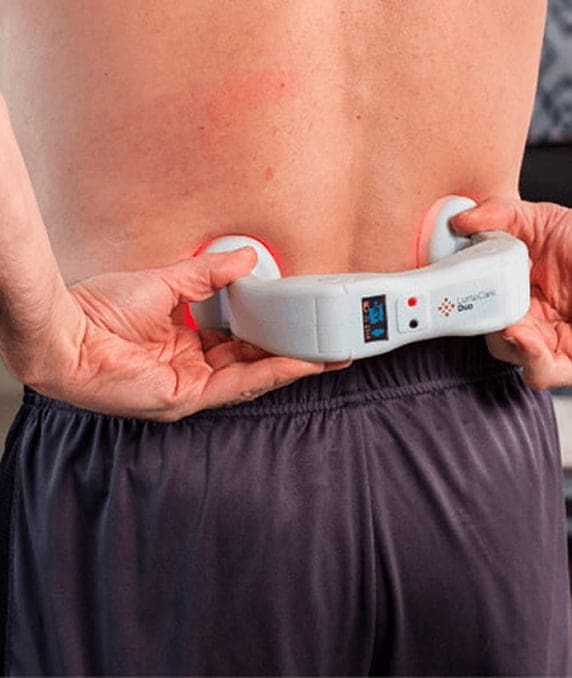
When you click through low level laser therapy (LLLT) devices for sale, what do you look for? Portability? Ease of use? How about power?
Is power level typically the deciding factor for which devices end up in your cart and which you scroll past? If you’re looking for a tool that works efficiently with deep penetration, a higher power stat means better performance, right? Wrong, and that’s actually one of the most common misconceptions in the cold laser therapy space.
Every device might boast a high power level. But before you make your purchase, you need to know what that actually means for its use. Here is your guide to understanding the reality of power output in a deep-penetrating LLLT device and what you should really be looking for.
Where Does the Power Assumption Come From?
If you believed that a high power output equals a high-quality device, we can’t blame you. It makes sense. A more powerful engine covers more ground. A higher-wattage appliance works faster. In many product categories, raw output scales directly with what a device can do.
When someone sees two devices side by side with different power outputs, the higher one feels like the stronger option. Manufacturers often reinforce this belief by leading with power specs in their marketing. What many people don’t realize, though, is that laser therapy devices do not follow the same logic.
What Power Output Actually Measures
Power output, typically expressed in milliwatts (mW) or watts (W), describes the rate at which a device emits laser energy. A higher power rating means the device is producing more energy per unit of time. But that number doesn’t determine where that energy ends up.
Light traveling through the body often must pass through multiple layers before reaching its target. Skin absorbs some. Tissue scatters more. The portion of light that reaches deeper structures depends on more than turning up the output.1
A higher-powered device will not automatically reach deeper tissue. Penetration depends on several factors, including wavelength, tissue composition, and how light interacts with the treatment area. Among those factors, wavelength plays a major role in determining how deeply light can travel through tissue.2
The Effect of Wavelength
Wavelength, measured in nanometers (nm), describes the physical properties of the light that the device emits. Those characteristics determine how far the light travels through biological tissue before it is absorbed or scattered.1
Shorter wavelengths tend to interact primarily with surface and skin-level tissue and absorb quickly upon exposure. Mid-range wavelengths travel further before absorption. They pass through the surface and reach the medium-depth tissue layers. Longer wavelengths generally penetrate deeper into tissue and may reach structures below the surface that shorter wavelengths cannot.1
Power output affects the amount of energy delivered, while wavelength influences how that light travels through tissue. When evaluating devices, wavelength can provide useful information about how light may interact with different tissue depths.
Energy Dosing Over Raw Output
In your research, you may have come across the term energy dosing. Energy dosing refers to the total amount of light energy delivered to a specific area during a session. It depends on several factors, including power output, treatment time, and the size of the area being addressed. Because these variables work together, evaluating a device requires more than looking at its power rating alone.
The goal is not simply to deliver as much energy as possible. Practitioners typically consider how treatment parameters, including wavelength, session length, and the characteristics of the treatment area interact with one another. Adjusting one variable without considering the others can change the overall amount of energy delivered.
As light travels through the body, tissues absorb and scatter a portion of that energy. The amount that reaches a particular area depends on multiple factors. For that reason, it is common to evaluate the complete treatment setup rather than relying on power output as a standalone measurement.
When comparing devices, energy dosing provides a broader picture of how a system is designed to operate. Power output remains an important specification, but it represents only one part of the overall equation. Understanding how power, wavelength, treatment time, and application area work together can provide a more complete view of how a device delivers light during a session.
How to Optimize Delivery
Some LLLT systems use more than one wavelength during a session. Different wavelengths interact with tissue in different ways, including how deeply light may penetrate and how it is absorbed or scattered.1 In practice, this allows you to use different wavelengths within a single session.
Consistency across sessions is also part of how LLLT is typically structured. Using repeatable treatment parameters can help you track and adjust how you are using the device over time. Changes in timing, dosing, or application can make protocols more difficult to compare across sessions.
Device selection often involves considering parameters such as wavelength and power output rather than a single specification like wattage. In practice, it can take time to determine appropriate settings and protocols for a given application. With a multi-wavelength device, you can typically adjust parameters based on how you are using the device and your treatment approach.
Considerations for Evaluating LLLT Devices
You shouldn’t ignore power output in the device listings, but it shouldn’t be your headline evaluation metric either. Think of the wattage in context with the wavelength and dosing information.
When reviewing an LLLT device, start with wavelength as one of several key specifications. Confirm the wavelength range and how it is described for intended applications. Look at what guidance the manufacturer provides for session parameters. A device designed with delivery optimization in mind typically includes clear instructions for session duration, frequency, and placement.
Once you have confirmed the wavelength range and session design, then you can better interpret how power output fits within the device’s overall specifications. It may not be the determining factor, but it is another contributor to your cold laser wellness routine.
Sources:
1https://pmc.ncbi.nlm.nih.gov/articles/PMC5653719/
2https://pmc.ncbi.nlm.nih.gov/articles/PMC5523874/