
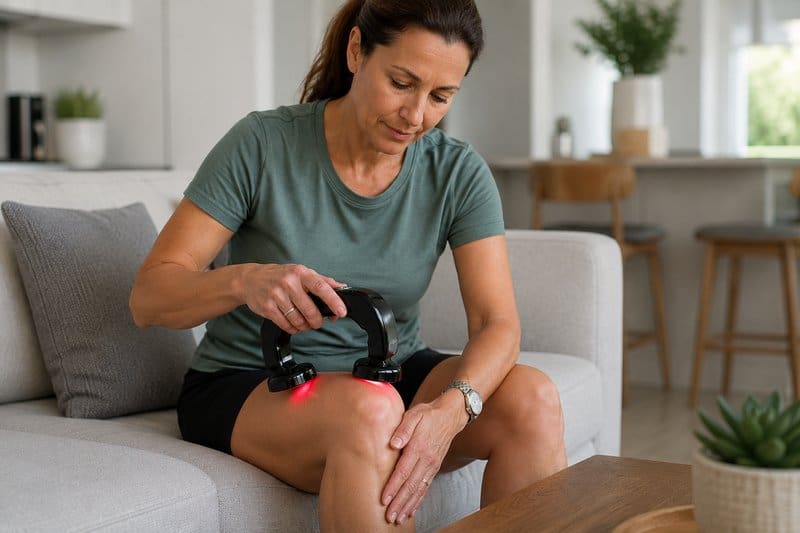
Shopping for a cold laser therapy device can feel like walking into a store where every product claims to be the best one. Technical specs crowd the product pages. Marketing language promises results without explaining the technology behind them.
You likely don’t have a background in photobiomodulation, but you don’t need one to make a good choice. So, how do you know which cold laser therapy device for sale you should go with?
The good news is that the decision comes down to a shorter list of practical factors than most product listings suggest. Once you know what to focus on, the process gets significantly easier. Here are some tips.
Why the Search Gets Complicated
Cold laser therapy is a relatively specialized category. That means few consumers are familiar with it, leaving far more room for confusing messaging. Product pages often lead with wavelength numbers, output power ratings, and technical certifications that mean little to someone who has never used one of these devices before.
Marketing adds another layer of complication. Instead of giving a straightforward description of how the device works, sellers typically make claims about what it does to your body. When that’s all you have to go on, it’s frustrating to try to figure out whether two products are genuinely different or just packaged differently.
You may spend a lot of time reading specifications that don’t connect to real-world use. You end up with more questions than answers, which makes it tempting to either pick randomly or put the decision off entirely. Neither of those is a good outcome when trying to build a consistent care routine with the best cold laser therapy device for pain management or recovery support.
Use Comes Before Numbers
The most useful first step is deciding how you plan to use the device, not which device has the most impressive specs. Think about how cold laser therapy actually fits into your life. A large clinic-style unit may have impressive specs, but it may be impractical for someone who wants to use it on the couch after work.
Here are a few questions worth answering before you start comparing products:
- Are you planning to use it exclusively at home, or does it need to travel with you?
- Which areas of your body do you want to focus on?
- How often are you realistically going to use it, and for how long each session?
- Are you looking for something you can use on your own, or will someone help you?
Remember that many people consider consistency an important factor in how they use LLLT devices. A device that fits easily into your routine is more likely to be used consistently.
Design Details Worth Paying Attention To
Once you know your use case, design becomes one of the next important things to evaluate. Session length is a practical place to start. Most cold laser therapy sessions run somewhere between three and seven minutes per area. If the device requires complex setup or multiple attachments, that can add time and difficulty to a simple routine.
Portability matters for similar reasons. Handheld devices are easier to maneuver. They make applying the device to a joint or a hard-to-reach spot much easier. Consider whether you can hold the device comfortably for a few minutes at a time without straining your hand or wrist.
You should also consider the kind of coverage you want. Single-head designs address one side of an area per session. A dual-head cold laser therapy device can address joint concerns from both sides at the same time, cutting total session time in half. If you’re managing discomfort in areas like the knees, ankles, shoulders, or wrists, that design difference has real day-to-day value.
Finally, check how much the device requires of you. Some devices come with multiple settings or modes for different tissue depths. Others are more straightforward. Neither is automatically better, but a device you can operate confidently on your own may be more practical than one with features that are rarely used.
A Quick Look at Wavelength
Wavelength is the spec that gets the most attention in cold laser therapy. It varies greatly from product to product. Though not necessarily the most important factor, it is worth understanding at a basic level.
In general terms, wavelength affects how light interacts with tissue. Different wavelengths can reach different tissue depths, depending on factors such as skin tone, tissue type, and the area being targeted.1 2 For that reason, some LLLT systems include multiple wavelengths rather than relying on a single wavelength alone.
Whether that difference matters for your situation depends on what areas you plan to use the device on. You do not need to become an expert in light wavelengths to make a good decision. When in doubt, ask your doctor for advice. Your provider can help you consider which device may fit into your care plan.
The Best Device Is One You Will Actually Use
Cold laser therapy requires consistent, repeated use over time. That framing should guide your buying decision more than any single specification.
A device with an impressive wavelength range but an awkward design may end up sitting in a drawer after only a few weeks. On the other hand, one with a portable design but bad coverage can end up feeling like a waste of money. But a device that fits naturally into your routine, takes a few minutes to use, and doesn’t require a major learning curve has a much better chance of becoming a part of your daily routine in a practical way.
Don’t overthink every number on the listing. Keep the decision grounded in what your day actually looks like. The right device is one you will reach for without thinking too much about it, not the one with the longest list of features on the box.
Video
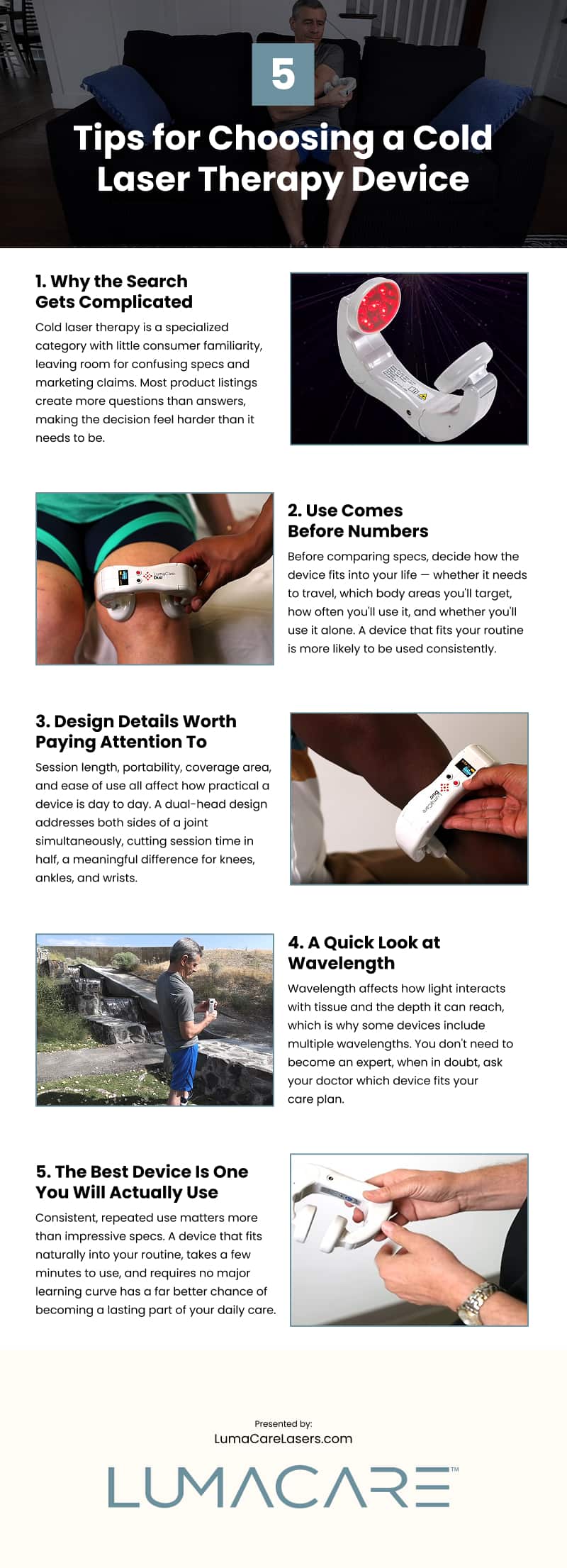
Infographic
Shopping for a cold laser therapy device can feel complicated because product listings rely on technical specs and marketing claims that don’t connect with how the device actually fits into your life. Explore tips for choosing a cold laser therapy device in this infographic.
Sources:
1https://pmc.ncbi.nlm.nih.gov/articles/PMC12861309/
2https://pmc.ncbi.nlm.nih.gov/articles/PMC13075973/